Overview
The objective of the Social Outcry Case is to allow competition participants to interact (“to break the ice”) and to understand the progression of market technology. This segment of the competition will not count towards the final scoring of RETC. The Social Outcry will be an exciting way far participants to interact with one another as well as a great preparation for the Quantitative Outcry. Participants will be ranked based on their Net Liquidation Value at the end of the case.
Description
Each participant will start the session with a neutral futures position. Participants are allowed to go long (buy) or go short (sell). All trades will be settled at the closing spot price.
Market Dynamics
Participants will trade futures contracts on an index, the RT100. The futures price will be determined by the market’s transactions while the spot price will follow a stochastic path subject to influence from qualitative news announcements that will be displayed on the ticker. One news announcement will be displayed at a time, and each news release will have an uncertain length and effect. Favourable news will result in an increase in the spot price while unfavourable news will cause a decrease in the spot price. These reactions may occur instantly or with lags. Each participant is expected to trade based on how s/he interprets the news and his/her anticipation of the market reaction.
Trading Limits and Transaction Costs
There are no trading commissions for the Social Outcry. Participants are only allowed to trade a maximum of 5 contracts per trade/ticket. The contract multiplier of RT100 futures is $10. There are no limits to the net position that traders con have.
Rules and Responsibilities
The following rules apply throughout the Social Outcry:
- Market agents are RITC staff members at the front of the outcry pit collecting tickets.
- Once parties have verbally committed to a trade, they are required to transact.
- All tickets must be filled out completely and legibly and verified by both parties with no portion of the ticket left blank. Illegible tickets may be ignored by the market agents!
- Both transacting parties are responsible for making sure that the white portion of the ticket is received by the market agent. The transaction will not be processed if the white portion is not submitted. Both trading parties must walk the ticket up to the market agent for the ticket to be accepted.
- Only the white portion of the ticket will be accepted by the market agent; trading receipts (pink and yellow) are for the team’s records only.
- RETC staff reserve the right to break any unreasonable trades.
- Any breaches of the above stated rules and responsibilities are to be reported to the market agent or floor governors immediately.
Position Close-Out and Scoring
Each person’s trades will be settled at the close of trading based on the final spot price. The ranking is based on the total P/L (profit/loss) from the trading session.
Example:
Throughout the trading session, one trader has made the following trades:
| Buy 2 contracts @ 998 | Sell 5 contracts @ 1007 | Buy 1 contract @ 1004 |
The market closed out@ 1000. The P/L for the trader is then calculated as follows:
| 2 long contracts @ 998 | 5 short contracts @ 1007 | 1 long contract @ 1004 | ||
| P/L: (1000 – 998) × 2 × $10 = $40 |
P/L: (1000 – 1007) × (–5) × $10 = $350 |
P/L: (1000 – 1004) × 1 × $10 = –$40 |
There are no commissions or fines in the Social Outcry. The trader has made a total P/L of $350.
Complete Transaction and Social Outcry Language Example
To find the market, traders simply yell “What’s the market?” If someone wants to make the market on the bid side, s/he can answer “bid 50” meaning s/he wants to buy at a price ending with 50 (1050, 1150), whichever is closest to the last trade. lf someone wants to make the market on the ask side, s/he/ will yell “at 51” meaning s/he wants to sell at a price ending with 51 (1051, 1151) closest to the last price. Note that so far, no quantity has been declared. Only two digits are required when calling the bid or ask. To complete a trade, someone willing to take the market price con simply say “bought two” to the person selling. The seller’s response must then be: “sold two” (or any other quantity below 2, but not 0, at the seller’s discretion). After the seller and the buyer fill out the trade ticket and submit the white part to the ticket taker, the trade is complete. Please note that the market maker (trader announcing the price) gets to decide the quantity traded up to a maximum of the quantity requested by the market taker.
A complete transaction could run as follows:
| Trader 1 | “What’s the market?” |
| Trader 2 | “bid 70, at 72” or “70 at 72”, (bid 1070, ask 1072, this trader wants to buy and sell) |
| Trader 3 | “at 71” (the new market is 1070 to 1071) |
| Trader 1 to Trader 3 | “Bought 5” (S/he wants to buy 5 contracts at 1071) |
| Trader 3 to Trader 1 | “Sold 3” (Although Trader 1 wanted to buy 5 contracts, Trader 3 only wants to sell 3 contracts so Trader 1 must accept the three contracts). |
| Trader 1 or Trader 3 | S/he fills out the trade ticket with initials from both Trader 1 and Trader 3. The white portion of the ticket is submitted to the market agent by both traders (both traders walk the ticket up to the front of the trading floor). Trader 1 (Buyer) keeps the yellow portion of the ticket and Trader 3 (Seller) keeps the pink (red) portion of the ticket. |
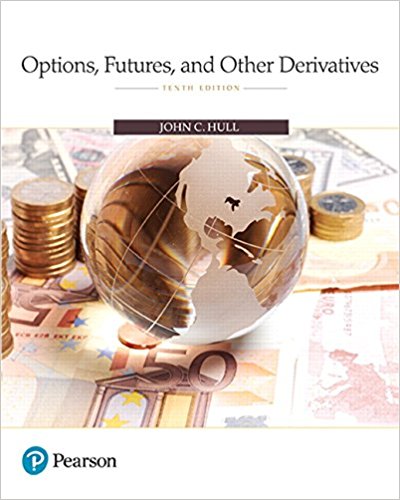
The winner will be awarded the last edition of John C. Hull’s book on Options, Futures, and Other Derivatives: